How Do You Engage Resistance?

James Robinson • August 1, 2024

Getting past obstacles and following your curiosity...


From June-November, I'd throw on a backpack and go rucking in silence in the morning for the first 3 miles.  The act of doing the first three miles in quietude is significant as a personal practice. The weight on my back is felt for the first half-mile, then it’s normalized, almost unnoticeable. With the exception of having to heave up on the straps to reallocate the weight every few hundred meters, I barely think about it. The silence forces me to listen to the ambient sounds around the neighborhood-- birds, traffic, car doors opening and closing, the random conversation of other walkers.


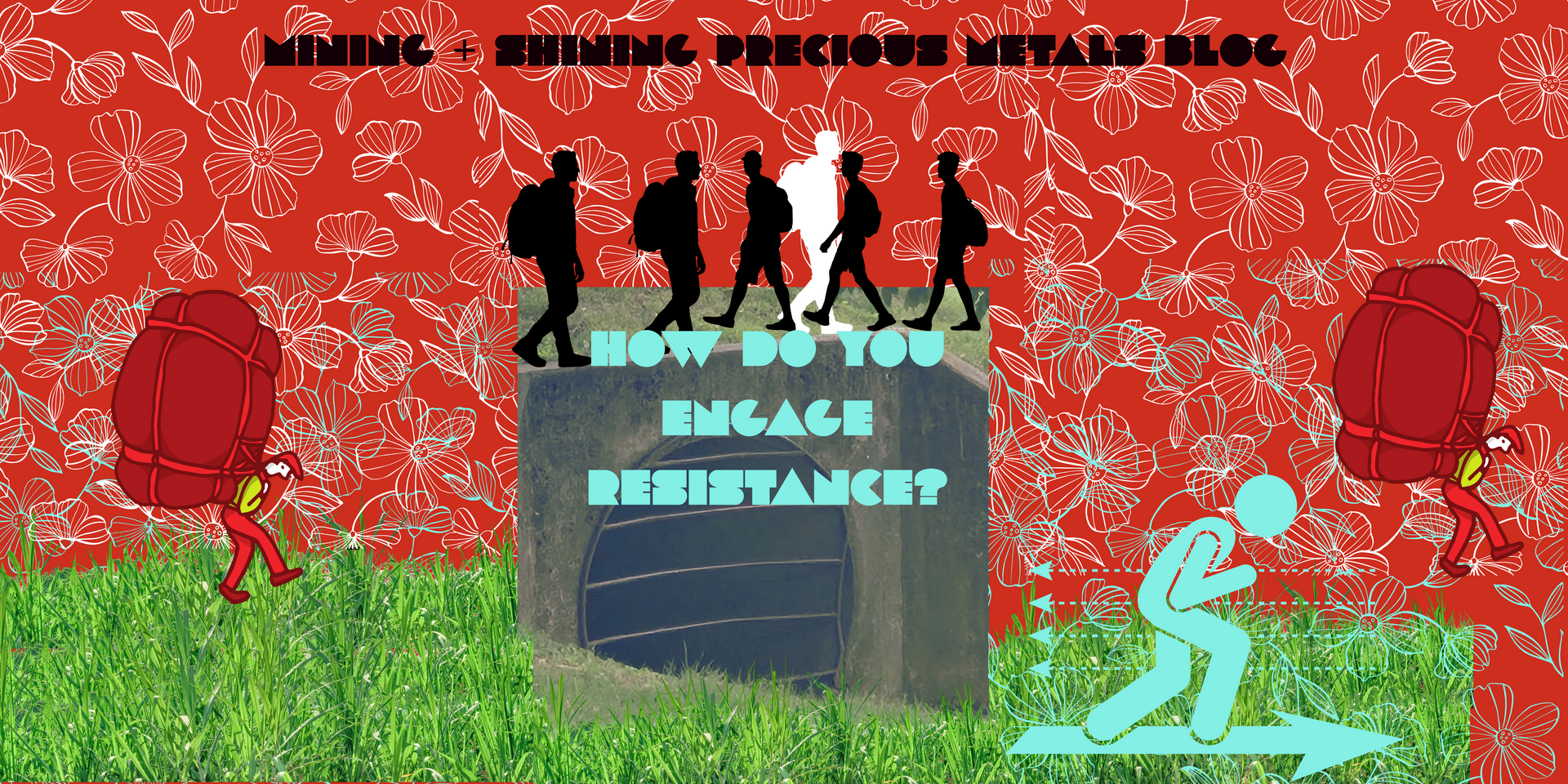
Because my listening is tuned to the frequency of the world around me, so is my sight– it follows the sounds.  I’ve put 104 hours on the road in the last two months , and have encountered and absorbed a myriad of information and insights, whether I’m conscious of it or not. For instance, today I noticed the bars covering the entrance of a tunnel. I’m surprised that this is the first time I’ve noticed. 


In the evenings, there are sometimes families flocked near the tunnel. Like most of the neighborhood, they likely don’t know where it leads. The tunnel could lead to the Harpeth River, by going under the busy Carruthers roadway. Or it may lead to Alabama. We don’t know.  Parents sit on the drought-brown pockets of grass on the knoll, in conversation, watching the kids, keeping them safe, then take a few glances at their cell phones. The kids explore the trickle of water, flip stones, play, and stick their faces between the bars to see what’s beyond the tunnel’s entrance.


The bars are there for safety. They exist to cause resistance, preventing people from getting into the tunnel to explore it and journey to the other side, wherever it may lead. But that’s obvious, right? Regardless, here are some insights from that walk:


  1. The Bars are illusive: The message of the bars is, “Do not enter. Danger lies ahead”, and yet the gap between each bar is wide. I’ll be 50 years soon, and I'm small enough to get between them– if only I can overcome my mind and push myself to explore. With almost 100% certainty,  kids have tried it– especially if their parents aren’t supervising. Resistance is like the bars at the tunnel’s entrance. Resistance tells you “you can’t”, but when you look at it closely, you can get by it– the gaps are big enough– all it takes is a little courage.
  2. The Tunnel will be uncomfortable: Getting past the bars is only the first obstacle, then it’s time for the journey. The tunnel is an uncomfortable 36 inches in circumference, which means a person either crouches the whole way or positions himself to crawl on the damp concrete– not knowing what’s on the other side. There will likely be discomfort. The bigger you are, literally and metaphorically, the more uncomfortable it is.  It takes commitment and courage to get to the other side– and there are no guarantees. 
  3. No Guarantees: What’s on the other side of the tunnel could be a quarry, a garbage heap. or a site so unimaginably beautiful that you rejoice in what you find. But there are no guarantees. That’s why it’s important not to get attached to the outcome. There are many tunnels to explore and this is just one of many. While you may need to take your courage to another tunnel to explore,  at least you now know that your courage works and is strong. SO long as you have resilience, you should be ok.


Noticing these small lessons in the real world is powerful. The weighted, silent walks help me learn. However, my favorite part of the walk is the last 1.5 miles, when I drop my backpack off at home and continue walking. While I became used to the weight the first few miles, I become aware of the weight as an unconscious burden at the end. Ridding myself of that burden makes me feel free, looser, and able to float through the day– which is why I start everyday the same way:  light, unburdened , ready to serve and maybe 1% wiser. 


By James Robinson March 7, 2026
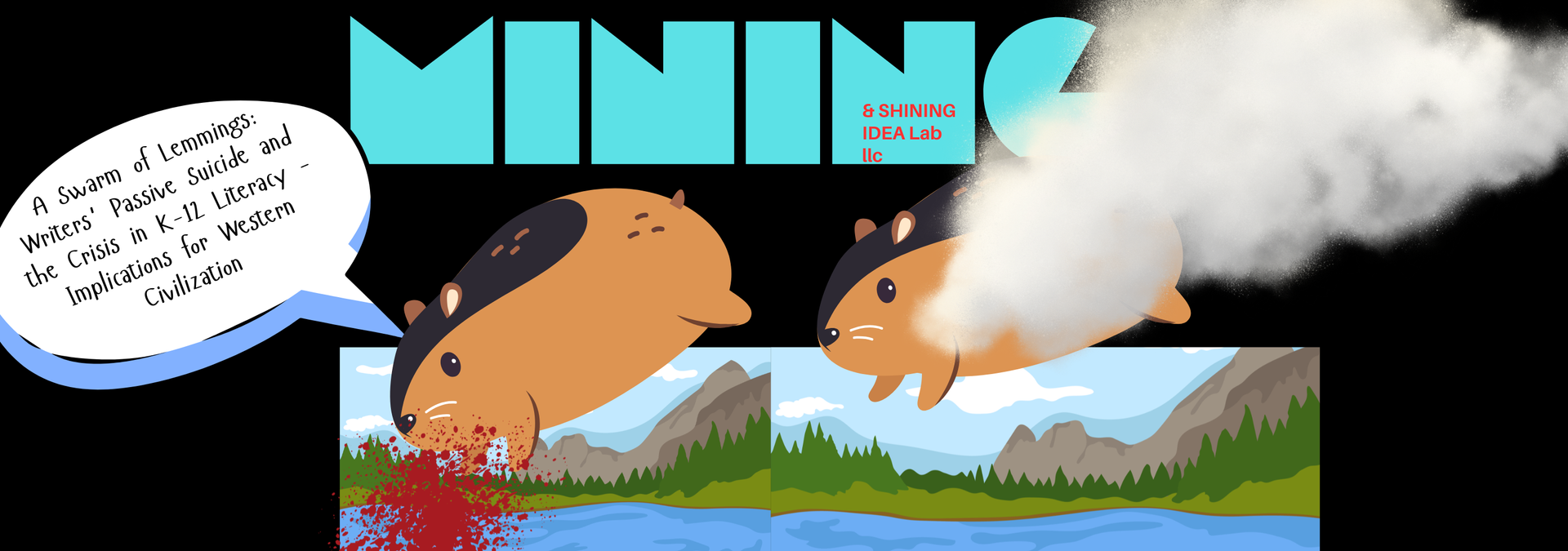
A swarm of lemmings continues their march to the proverbial sea, attracted by a temporary vision of sun and beauty, but ultimately distracted by that vision—thus, they fall off the cliff in a passive suicide. It wasn’t a conscious decision. Their deaths were the consequence of distraction alone. In this allegory, the lemmings are writers (and many in publishing) who ignore the erosion in elementary schools and K-12 education. Writers may create brilliant work, but if students graduate without the skills to engage deeply, our audience vanishes. From a cultural perspective, this is alarming—and the stakes extend to the health of Western civilization itself. In my day job, as Executive Director of a small non-profit, I oversee a pre-K program, a charter school, and our efforts to revitalize a publishing company re-dedicated to high-quality children's books, which we're strongly considering. These trends hit close to home: we're building foundations early because the data shows the stakes are high—not just for individuals, but for the shared knowledge, critical reasoning, and civic discourse that have sustained Western democratic traditions for centuries. Key trends: Average Grade Level of Books Sold Now vs. 1950: Decline Toward Grade 5–7 Bestsellers today often score 5th–7th grade on Flesch-Kincaid (many 4th–6th for broad appeal), with simpler sentences and vocabulary to match declining adult reading stamina. Mid-20th-century works frequently demanded more (closer to 7th–9th in analyses), reflecting a market shift toward accessibility amid falling literacy. Didactic vs. Non-Didactic vs. Classics: Effects on Brain Development Narrative-driven reading (non-didactic stories or classics) sustains broader brain activation—engaging language, empathy, memory, and connectivity regions more effectively than passive or overly didactic methods. Neuroscience shows immersive storytelling promotes neuroplasticity and deeper neural pathways, while fragmented/instructional approaches may limit sustained engagement and cognitive depth needed for complex literature. If Trends Continue: What Will Texts Look Like in the Future—4th Grade? Pleasure reading has plummeted ~40% over 20 years (daily readers from 28% peak in 2004 to 16% in 2023); adult literacy scores dropped sharply (many below 6th grade); NAEP reading scores remain at historic lows. Unchecked, popular texts could simplify to 4th-grade or lower: basic vocabulary, short sentences, reduced nuance—eroding space for sophisticated writing. These declines threaten more than literacy: they undermine the foundations of Western civilization. Deep reading fosters critical thinking, empathy, and shared cultural references essential to informed citizenship and democratic debate. As reading wanes, societies risk shallower discourse, greater susceptibility to manipulation, weakened civic engagement, and a fraying of the reflective reasoning that has driven progress, innovation, and self-governance in the West. This isn't inevitable. Writers and creators bring storytelling, imagination, and engagement that schools and early programs need most. Call to Action: Get involved in schools and early education. Ask kids about the books you remember reading when you were a kid– The Oddyssey, Of Mice and Men, Leaves of Grass. Advocate for narrative-rich curricula, or support initiatives like ours in pre-K and charter settings. Or send me an email, I'd love to chat. When we relaunch our website in the summer, we'll have some exciting news. We have a lot of work to do-- and we're all learning from it.
By James Robinson February 21, 2026
Pushing and Pulling The "push" connotes aggression whereas the "pull" connotes invitation. The "push" is a criticism, and the "pull" is coffee and advice at a nice cafe selected just for the advisee. Both are needed in different measures, at different times and often towards the same ends. In 2024, I engaged in a sabbatical to step back, read, study, think, and reflect about schools and leading through the pandemic. It was a very prolific period. However, what made it prolific was the "push"-- spending days reviewing data and learning to criticize the sector I worked in. The Courage Gap Talks document those learnings, in the most lo-fi way. They're ugly, but they inform the work and solutions we're imlpementing at the park, where our goal is to "pull" folks into a transformative educational envioronment. Originally, they were called "Career-Suicide Notebooks", the original plan being to walk away from education all together. Instead, what I learned will inform my work for years. It's been said that Buddhist monks can see the world in a grain of rice. After being immersed in education for several years, I see the world in a school ecosystem. Thus, schools enter my creative work and the way I think about creativity enters my work in schools. The first video is called 33% and it looks at the proficiency scores of 4th grade students on the NAEP Assessment. Additionally, it looks at the broad economy that works to maintain the status quo.